Ana Santos Almeida

Principal Investigator

Dr. Ana Santos Almeida is a cancer immunologist and Principal Investigator of the Microbiome in Health and Disease Laboratory at GIMM. Her research explores the interplay between the human microbiome and the immune system, with a focus on translating this knowledge into innovative microbiome-based therapies. In addition to her work in colorectal cancer, she is deeply committed to advancing women’s health through the AGEWISE project, where she investigates how microbiome can help improve health outcomes during the menopausal transition and ageing. For a full list of publications check: https://tinyurl.com/p6vxj2na

Marta Silva

Research Fellow - Gut-Brain Axis in Menopause

Marta Silva is a research fellow contributing to the MENOGUT-BRAIN subproject within AGEWISE. Her research focuses on the gut-brain-hormone axis during the menopausal transition, integrating hormonal profiling, inflammatory markers and microbiome data to understand variability in symptom burden.

Catarina Tomaz

MSc Student

Catarina Tomaz is an MSc student whose work focuses on integrative analysis of metagenomic and biomarker data to support predictive modelling of menopause- associated health risks. Through this approach, she aims to help identify biological patterns that may improve risk stratification and personalised prevention strategies in women’s health.

Diana Alves

Medical Doctor

Dr. Diana Alves is a medical doctor with a Junior Clinician Grant from GIMM CARE mentored by Dr. Ana Almeida and Dr. Catarina Reis-de-Carvalho from the Department of Obstetrics, Gynecology and Reproductive Medicine at ULS Santa Maria, she integrates hormonal, inflammatory and gut microbiome data within a clinically informed framework. Her medical expertise ensures strong clinical oversight of the project, contributing critical patient-centred insight and supporting the development of personalised, precision medicine approaches in women’s health.
Understanding Menopause Through the Gut Microbiome

How do hormonal changes during menopause interact with the gut microbiome to shape long-term health?

AGEWISE is a translational research initiative exploring how menopause influences the gut microbiome and how these changes may contribute to symptom variability and chronic disease risk.

Learn About the Project

Research

What Is AGEWISE?

FIRST EVER STUDY OF MENOPAUSE AND MICROBIOME IN PORTUGAL

AGEWISE investigates the interaction between:

  • Female sex hormones

  • The gut microbiome

  • Systemic inflammation

  • Age-related disease risk

Our goal is to better understand how these biological systems interact during menopause and to contribute to more personalised approaches to women’s health and healthy ageing.

Research

Why This Research Matters

  • During the menopausal transition, women experience profound biological changes. Alongside hormonal shifts, the risk of cardiovascular disease, metabolic disorders and other chronic conditions increases.

  • Emerging research suggests that the gut microbiome - the community of microorganisms living in our intestines - may play an important role in regulating inflammation, metabolism and even brain function during this transition.

  • However, many mechanisms remain poorly understood.

Agewise seeks to help close this gap

STATISTICS

Our Approach

AGEWISE combines:

Clinical evaluation

Assessment of participants’ clinical history, menopausal status, symptoms, anthropometric measures, and relevant health/lifestyle factors.

Hormonal profiling

Comprehensive characterization of circulating hormone-related metabolites using metabolomics to capture endocrine changes across the menopausal transition.

Inflammatory markers

Quantification of systemic inflammatory biomarkers, including CRP and IL-6, using ELISA-based assays.

Gut microbiome analysis

Characterization of gut microbial composition and diversity to identify microbiome patterns associated with menopausal status and clinical features.

Integrated data modelling

Joint analysis of clinical, hormonal, inflammatory, and microbiome data using multivariate/statistical modelling to identify cross-domain patterns, associations, and potential predictors.

This interdisciplinary approach allows us to explore menopause as a whole-body transition rather than a purely hormonal event.

Participation & Recruitment

Participate in AGEWISE

We periodically organise open days and recruitment sessions for women interested in contributing to menopause research.
When recruitment is open, details will be available here.

Find Out If You’re Eligible

Eligibility criteria and study information will be provided during recruitment periods.

MENOGUT-BRAIN

Exploring the Gut-Brain Axis in Menopause
  • MENOGUT-BRAIN is a sub-project within AGEWISE focused on understanding why menopausal symptoms vary so widely between women.
  • While some experience minimal disruption, others face severe sleep disturbances, mood changes or vasomotor symptoms. Classical factors alone do not fully explain this variability.
  • We investigate whether the gut microbiome and its interaction with hormonal and stress pathways may help explain these differences.
  • By integrating biological data across systems, we aim to identify patterns that may one day support better stratification and targeted interventions.

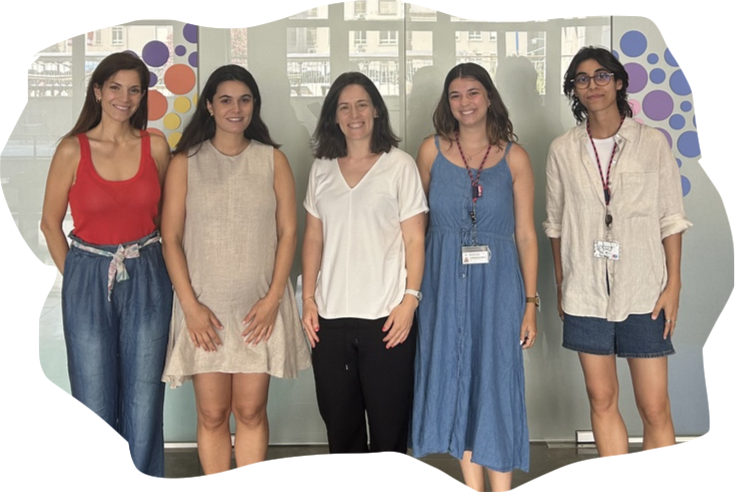
Meet the Team

Principal Investigator

Ana Santos Almeida

Dr. Ana Santos Almeida is a cancer immunologist and Principal Investigator
More
Research Fellow

Marta Silva

Marta Silva is a research fellow contributing to the MENOGUT-BRAIN subproject within AGEWISE.
More
MSc Student

Catarina Tomaz

Catarina Tomaz is an MSc student whose work focuses on integrative analysis of metagenomic.
More
Medical Doctor

Diana Alves

Dr. Diana Alves is a medical doctor with a Junior Clinician Grant from GIMM CARE mentored by Dr. Ana Almeida and Dr. Catarina Reis-de-Carvalho from the Department of Obstetrics,
More

Collaborators

Catarina Reis Carvalho

Faculdade de Medicina, Universidade de Lisboa; Unidade Local de Saúde de Santa Maria

Ana Teresa Freitas

INESC-ID - Instituto de Engenharia de Sistemas e Computadores: Investigação e Desenvolvimento; Instituto Superior Técnico

Catarina Sousa Guerreiro

Centro Académico de Medicina de Lisboa, Faculdade de Medicina, Universidade de Lisboa; Instituto de Saúde Ambiental (ISAMB), Faculdade de Medicina, Universidade de Lisboa